
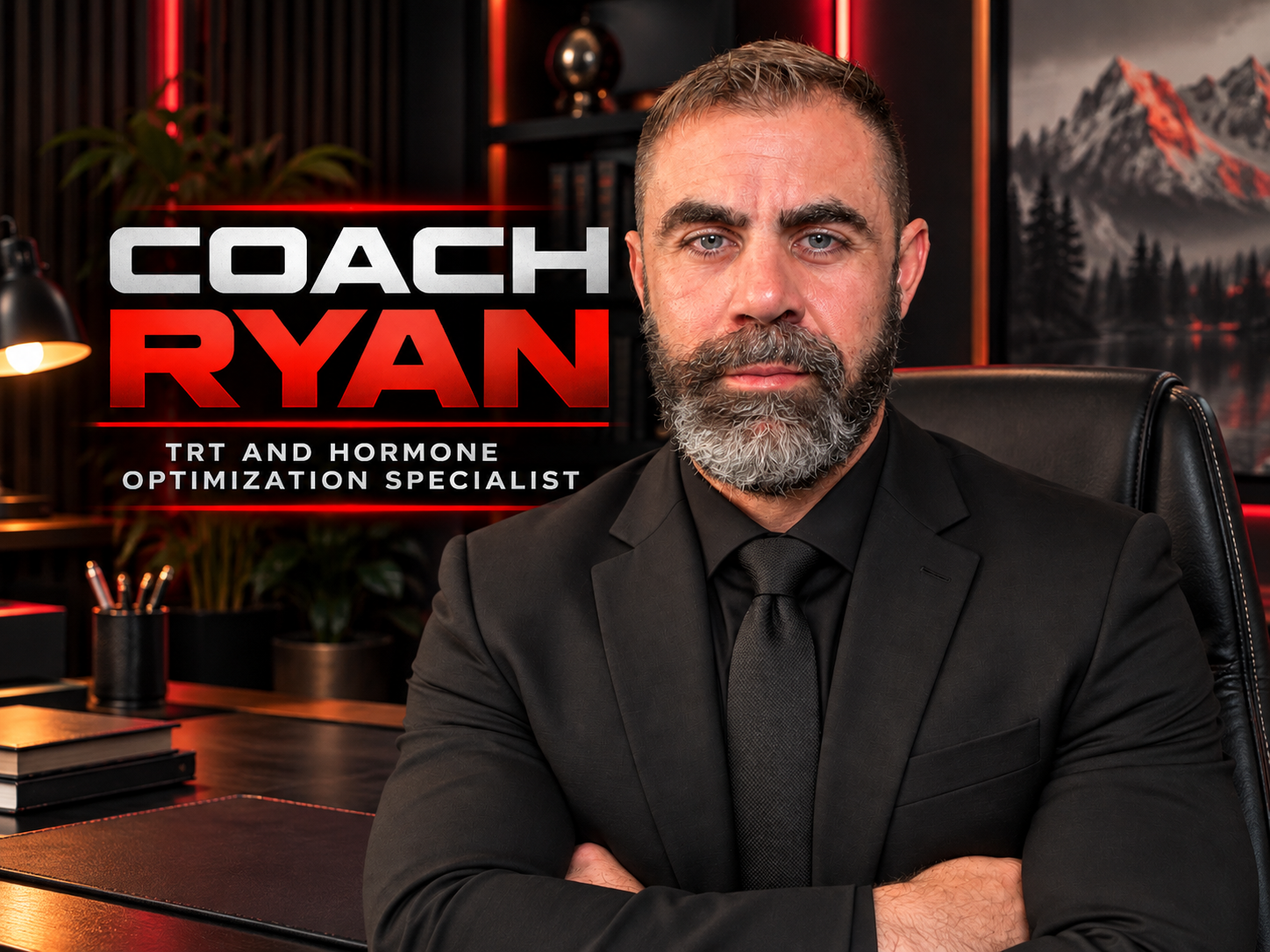
18 Years Studying Human Physiology & Performance
Ryan has spent approximately 18 years studying and working across multiple areas of human physiology, with an increasingly specialized focus on testosterone replacement therapy, male sexual function, and complex hormone dynamics.
His work spans Testosterone Replacement Therapy, dihydrotestosterone therapy, complex hormone-balance dynamics, erectile physiology, libido neurology, tactile sexual sensation physiology, TRT protocol architecture, neuroscience, nutraceutical science, gastroenterology, the intestinal microbiome, and general physiology.
In 2016, Ryan began receiving increasing requests from within the sexual-dysfunction community to focus specifically on difficult libido and erectile-function cases. What began as a focused area of interest quickly developed into years of intensive work centered around complex male sexual dysfunction, hormone optimization, and sexual-function problems occurring during testosterone replacement therapy.
As his work moved deeper into TRT, Ryan began analyzing the variables that conventional discussions frequently treated in isolation: testosterone dose, injection frequency, estradiol, DHT, prolactin, HCG, androgen exposure, erectile physiology, neurological libido signaling, sexual sensation, and the relationship between protocol architecture and real-world sexual response.
Over the years, Ryan has worked with and educated thousands of men dealing with TRT-related sexual-function problems, including diminished libido, inconsistent erections, reduced penile sensation, altered climax response, and protocols that produced acceptable laboratory numbers without producing the desired real-world outcome.
What Sets Ryan's Work Apart
Years of physiology research, direct case experience, and protocol analysis have produced a focused framework for understanding the variables that actually matter when sexual function on TRT isn't where it should be.
TRT should not be reduced to chasing a testosterone number on a laboratory report. The objective is to understand the entire physiological system and how its individual variables interact to influence sexual function, physical performance, energy, cognition, well-being, and quality of life.
Choose direct consulting with Ryan for individualized analysis, or explore Cortex Labs downloadable TRT guides and educational systems to deepen your understanding of hormone optimization and sexual function.